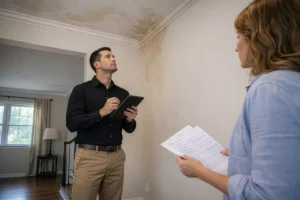
Storm damage repair often starts with securing the property before the full damage can be inspected. In this New Bern, NC case study, a fallen tree struck the roof and porch overhang during severe weather, damaging exterior materials and allowing water to enter the structure. CareMaster helped coordinate tree removal, provide emergency tarping, inspect moisture, dry affected materials, and complete repairs.
How the Storm Damage Happened
After a strong summer thunderstorm moved through New Bern, NC, a tree fell across the front of the home and landed on the roof near the porch. The impact damaged shingles, roof decking, and the porch overhang. It also created openings where rainwater could enter the roof system.
At first glance, the most obvious damage was outside: the tree across the roof, broken roofing materials, and damage around the front porch area. However, roof storm damage rarely stays outside once the roof is opened. Water can soak wood framing, insulation, ceiling materials, and nearby wall cavities before it becomes visible indoors.
In this case, water began intruding into the foyer and living room area beneath the damaged roof and porch section.
Stabilizing the Property Came First
Before the roof, porch overhang, or interior areas could be fully inspected, the fallen tree had to be handled safely. A tree resting on a damaged roof can shift, add weight to weakened materials, and create hazards for anyone near or beneath the affected area.
CareMaster worked with a tree service to remove the tree safely so the structure could be accessed without creating additional damage. Once the tree was removed, the damaged roof area was protected with emergency tarping to limit additional water intrusion.
In the first moments after this kind of loss, severe weather safety matters more than trying to inspect the roof yourself. Homeowners should avoid climbing onto damaged roof surfaces, walking beneath unstable areas, or touching wet electrical fixtures.
What the Inspection Found
After the tree was removed and the roof was temporarily protected, the CareMaster team inspected the home to determine how far the damage had spread. The fallen tree had affected more than the shingles. The impact damaged the roof structure and porch overhang, while rainwater entered through the compromised roof area.
Inside the home, moisture readings showed that water had reached materials beneath the damaged area. The foyer and living room area were especially important to inspect because water from roof damage can move through insulation, ceiling cavities, trim, and flooring before it is fully visible.
The team documented roof impact damage, porch overhang damage, ceiling staining, wet insulation, elevated moisture in nearby materials, and affected flooring or interior finishes. This helped clarify the scope of damage and supported communication with the homeowner’s insurance company.
Why Moisture Readings Mattered
A ceiling stain can show where water appeared, but it does not show everywhere water traveled. Water entering through a damaged roof can soak into wood, insulation, drywall, flooring, and other building materials. Some moisture may remain hidden after the surface begins to look dry.
CareMaster used moisture readings to identify affected areas, guide drying equipment placement, and monitor progress as the structure dried. This helped determine which materials could be dried and which needed removal or replacement.
For homeowners, this is where roof storm damage repair services become especially important. The repair is not only about fixing the roof. It is also about finding the water that entered through the damaged area and making sure the structure below is dry, stable, and ready for restoration.
What This New Bern Case Study Shows
This New Bern, NC project shows why a fallen tree on a roof should be treated as both a structural and water damage concern. The exterior damage was obvious, but the longer-term risk came from water entering the roof system and spreading into interior materials.
The response required several connected steps:
- Stabilize the area
- Coordinate safe tree removal
- Provide emergency tarping
- Inspect the roof, porch overhang, ceiling, insulation, walls, and flooring
- Take moisture readings and document the damage
- Begin drying affected materials
- Complete repairs once the structure was ready
Each step helped move the property from emergency response to full restoration without guessing at the extent of the damage.
Full Repairs After the Storm
After mitigation and drying were complete, CareMaster moved into the repair phase. The damaged roof was repaired, along with the porch overhang affected by the fallen tree. Interior repairs included the ceiling, affected flooring, and any damaged materials that could not be properly dried or restored.
That full-service approach matters because a roof opening can lead to wet insulation, stained ceilings, damaged flooring, and repairs in multiple areas of the home. Understanding broader summer storm water damage risks can also help homeowners prepare before another storm exposes weak points around the property.
Get Help After Roof Storm Damage
Roof storm damage can quickly become more than an exterior repair, especially when a fallen tree damages the roof, porch overhang, and interior areas below. If your home or business in New Bern, NC or the surrounding area has experienced storm damage, CareMaster can help stabilize the property, coordinate emergency protection, document the loss, dry affected materials, and complete the storm damage repair process from response through final repairs.