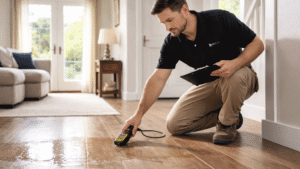
Summer storm water damage can happen quickly in North Carolina when heavy rain, wind, and poor drainage overlap. Homeowners can reduce the risk by keeping gutters clear, moving water away from the foundation, maintaining the roof and exterior, and preparing before severe weather arrives. These preventive steps help limit water intrusion, hidden moisture, and costly repairs.
Why Summer Storms Create Water Damage Risks
North Carolina summers often bring fast-moving thunderstorms, heavy downpours, tropical moisture, and saturated ground. Even a well-maintained home can struggle when rain falls faster than the property can drain. Water may back up around foundations, enter crawl spaces, seep under doors, or find weak points along the roofline.
Storm damage does not always look serious at first. A small window leak, damp crawl space, or slow attic drip can become a larger problem if moisture stays hidden. Ready.gov offers helpful guidance on severe weather preparedness, but local maintenance is what helps keep stormwater outside.
Keep Gutters and Downspouts Working Properly
Gutters are one of the simplest defenses against summer storm water damage, but they only work when water can move freely. Leaves, pine straw, roof grit, and small branches can block the flow and cause rainwater to spill over the sides. When that happens, water can collect near the foundation, splash against siding, or soak fascia boards.
Before storm season, check your gutters from the ground if possible. Look for sagging sections, overflow marks, loose brackets, or downspouts that discharge too close to the house. If water drains beside the foundation, add extensions to move it farther away.
A few practical gutter checks include:
- Clear debris from gutters and downspout openings.
- Confirm downspouts are not crushed, disconnected, or clogged.
- Make sure water flows away from the foundation.
- Look for staining or erosion below roof edges.
Once gutters are clean, watch how water moves during the next rain. That quick inspection can reveal problems that are easy to miss on a dry day.
Improve Drainage Around the Home
Water follows the easiest path. If the soil slopes toward your home, summer storms may push water where you least want it. Poor grading, clogged yard drains, compacted soil, and low spots near the foundation can all increase water damage risk.
Walk around the exterior after a moderate rain and look for standing water near crawl space vents, basement entries, exterior doors, patios, and driveway edges. If water lingers near the structure, drainage may need attention before a larger storm exposes the weakness.
Simple improvements may include adding soil to low areas, extending downspouts, clearing landscape drains, trimming vegetation, or adjusting mulch beds so they do not trap water against siding.
Check the Roof, Windows, and Exterior Openings
A summer storm does not need to remove shingles to create water damage. Wind-driven rain can enter through worn seals, damaged flashing, cracked caulk, loose siding, or gaps around exterior penetrations. These small openings are easy to ignore until rain finds them.
Inspect the home from the ground and look for missing shingles, lifted roof edges, damaged vent boots, loose trim, or peeling caulk around windows and doors. Inside, watch for ceiling stains, bubbling paint, musty odors, or discoloration near exterior walls.
If your home has an attic, check it safely during daylight. Moisture stains on roof sheathing, damp insulation, or rusty fasteners can point to a roof leak.
Prepare Before Severe Weather Arrives
Storm preparation works best before warnings are issued. Once heavy rain starts, it is harder to safely clear drains, move outdoor items, or inspect vulnerable areas.
Create a simple pre-storm routine for your home. Secure patio furniture, check sump pumps if you have them, confirm drains are clear, and move valuables off floors in basements, garages, or low storage areas.
It can also help to review your insurance information before damage occurs. Know your deductible, coverage limits, and documentation process. Photos of the home’s condition before a storm can be useful if you later need to file a claim.
For homeowners who already deal with seasonal flooding or repeated leaks, review spring flood preparation tips as part of your broader storm readiness plan.
Know What to Do if Water Gets Inside
Even with good preparation, some storms overwhelm drainage systems or damage the exterior. If water enters your home, act quickly and safely. Avoid standing water near electrical outlets, appliances, or damaged wiring. Stop the water source if it can be done safely, then document the damage with photos and notes.
Remove small items from wet areas if they are safe to handle, but do not disturb materials that may be contaminated or structurally damaged. Wet drywall, flooring, insulation, and crawl spaces often need professional drying to prevent secondary damage.
CareMaster provides storm damage repair services for homeowners dealing with water intrusion after severe weather. Restoration teams can assess moisture, dry affected areas, and help document the process for insurance.
Protect Your Home Before the Next Storm
Reducing summer storm water damage starts with routine maintenance, smart drainage, and fast action when problems appear. Clear gutters, direct water away from the home, inspect exterior openings, and prepare before severe weather is in the forecast. If a storm does cause water damage, CareMaster can help you respond quickly and restore your home with practical, professional support.