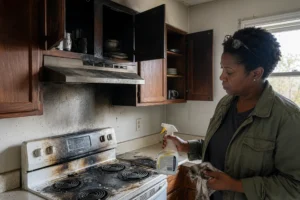
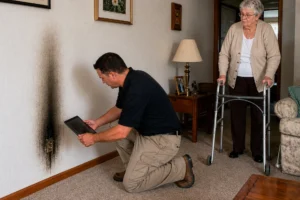
Mold on drywall can be a small surface issue, or it can mean moisture has reached deeper into the wall. That difference matters because cleaning may be reasonable in some cases, while drywall replacement is often needed when the material is wet, damaged, contaminated, or moldy behind the surface.
Mold on Drywall Starts With Moisture
A visible mold spot is only part of the story. Before deciding whether to clean or remove drywall, the moisture source has to be found and corrected. A small condensation issue near a window is different from a slow plumbing leak inside a wall, a roof leak, floodwater, or a long-term humidity problem.
That is why the decision should not be based only on how the wall looks. Painted drywall may hide moisture behind the surface, and a small stain can sometimes point to a larger problem inside the wall cavity. CareMaster’s professional mold remediation can help evaluate the affected area and determine whether drywall can be cleaned or should be removed.
Determining the Best Course of Action
When deciding whether to clean or remove moldy drywall, it’s important to follow these steps:
- Find and stop the moisture source. Mold cleanup will not last if water is still entering the wall or humidity remains too high.
- Check whether the drywall is still sound. Soft, swollen, crumbling, sagging, or delaminated drywall usually points toward removal.
- Determine whether the mold is surface-level or deeper. Growth limited to a small painted surface may be cleaned, but mold on the paper face, back side, insulation, or framing changes the decision.
- Dry and verify before repairs. New paint, patching, or replacement materials should not be installed until affected areas are dry.
This sequence keeps the decision grounded in the actual condition of the wall, not just aesthetics.
When to Clean
Cleaning may be possible when the mold is limited, surface-level, and the drywall is still firm. This is more likely when the affected area is small, the wall is painted, the moisture source has been corrected, and there is no evidence that growth has spread into the wall cavity.
Even then, cleaning should be handled carefully. The goal is not just to make the stain disappear. The area needs to be cleaned properly, kept from spreading particles into the surrounding space, and dried so the same conditions do not return.
When to Remove
Drywall is a porous building material. Once moisture reaches the paper facing, gypsum core, seams, insulation, or back side of the wall, surface cleaning may not be enough. In those cases, removal allows the affected cavity to be inspected, dried, cleaned, and repaired correctly.
Drywall replacement is usually the safer option when:
- The drywall is soft, swollen, sagging, or crumbling
- Mold appears on both sides of the drywall
- The wall cavity, insulation, trim, or framing is affected
- The moisture source was hidden, long-term, or recurring
- The damage involved floodwater, sewage, or other contaminated water
- Musty odors remain after surface cleaning
- Mold returns after previous cleanup attempts
These signs suggest the problem is no longer limited to a washable surface.
Why Replacement Is Often the Safer Choice
The EPA’s guidelines for cleaning mold emphasize fixing the water problem, drying materials completely, cleaning mold from hard surfaces, and discarding absorbent or porous materials when they cannot be cleaned properly.
That guidance matters for drywall because drywall is not the same as tile, glass, or metal. It has paper, gypsum, joint compound, seams, cut edges, and hidden surfaces. When those materials absorb moisture, the visible mold may only be one part of the issue.
Tips for Replacing Moldy Drywall
When drywall has to be removed, the wall cavity may need drying, cleaning, and inspection before new materials are installed. Insulation, trim, framing, or nearby flooring may also need evaluation if moisture traveled beyond the first visible area.
This can also be a chance to make smarter repair choices. In areas that are more likely to see moisture, replacing it with better materials may help reduce future problems.
Avoid “Quick Fixes”
Painting over mold does not remove growth, correct moisture, or dry the wall. It may cover the stain for a while, but the underlying problem can remain active behind the new coat of paint.
The same is true for spraying a cleaner and moving on too quickly. If the wall is still damp or mold has reached the back side of the drywall, the problem can return. Mold on drywall needs a complete decision: correct the moisture source, determine whether the material is restorable, then clean or remove it based on the actual damage.
The Final Rule of Thumb
If the drywall is solid, the mold is limited to a small painted surface, and the moisture source has been fixed, cleaning may be possible. If the drywall is wet, soft, contaminated, moldy behind the wall, or affected by a larger water loss, removal is usually the better path.
If you find mold on drywall and are unsure whether it can be cleaned or should be removed, CareMaster can evaluate the damage and help determine the best course of action.