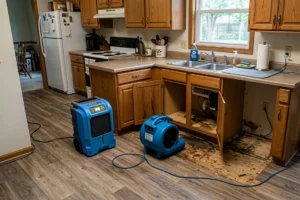
Recently, a home in Wilson, NC experienced a washing machine leak that quickly spread from the laundry room into the hallway and nearby living space before the homeowner realized how much water had escaped. CareMaster responded with quick water extraction, moisture mapping, structural drying, and documentation to help limit damage to the home’s flooring, walls, trim, and contents.
How the Leak Started
Sometimes the source is obvious, such as an overflowing washer that sends water across the laundry room floor. More often, though, washing machine leaks begin behind or beneath the appliance where they are harder to see. A loose hose connection, cracked supply line, or failed drain hose can release enough water to move under vinyl, laminate, tile edges, baseboards, or nearby carpet before anyone notices the floor is soaked.
At the Wilson, NC home, the homeowner noticed water spreading from the laundry area after a wash cycle. Upon inspection, the leak appeared to be coming from a faulty supply hose behind the washing machine. The appliance was shut off, visible water was soaked up with towels, and the affected area was checked for moisture in the hallway and nearby living space. That early response mattered because the faster a washing machine leak is addressed, the lower the chance of secondary damage.
Even when the floor looks mostly dry, moisture can remain in subflooring, wall cavities, insulation, and trim. That hidden moisture is why professional drying is different from mopping up the surface.
First Priorities After Discovery
The first step after discovering a washing machine leak is to stop the water source and make sure the area is safe. If water is near outlets, appliances, or electrical panels, homeowners should avoid contact until the area can be checked safely. Once the immediate hazard is controlled, documentation becomes important.
Photos of the appliance, flooring, walls, and affected contents can help show the original condition of the loss. Notes about when the leak was found, how long the water may have run, and which rooms were affected can also support an insurance claim.
In this case, the homeowner called CareMaster soon after discovering the leak. We were able to walk her through the first response steps before dispatching our Wilson restoration team to begin water extraction, moisture assessment, and drying.
What the Cleanup Process Involved
The cleanup process followed a practical sequence rather than a one-size-fits-all checklist. The goal was to remove water, locate hidden moisture, protect nearby contents, and dry the structure safely.
- Water was extracted from affected flooring and accessible surfaces.
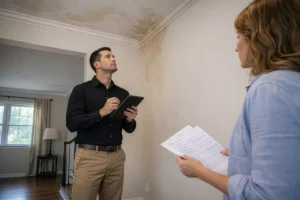
- Moisture readings were taken around the laundry room, baseboards, nearby walls, and adjoining areas.
- Wet or vulnerable contents were moved out of the drying zone.
- Drying equipment was placed based on the size and location of the affected materials.
- Progress was monitored so the drying plan could be adjusted as conditions changed.
This structure keeps the response organized without rushing past important details. If moisture is only addressed where it is visible, water damage can continue beneath the surface. That can lead to warped materials, odors, microbial growth, or unnecessary demolition later.
Why Moisture Mapping Matters
A washing machine leak rarely respects room boundaries. Water may follow seams, framing, slopes in the floor, or gaps under trim. Moisture mapping helps identify where the water traveled so the drying plan matches the actual loss.
Technicians may check flooring, drywall, baseboards, cabinets, and adjoining rooms. They may also look for trapped moisture beneath finished materials. The goal is not to remove more than necessary. The goal is to find what is wet, dry what can be dried, and identify materials that cannot be safely saved.
A laundry room may look normal after towels and fans have been used, but the materials underneath may still be holding moisture. Professional drying equipment and monitoring help confirm when the structure is returning to an acceptable condition.
Appliance Issues That Can Lead to Water Damage
Washing machine leaks can come from several sources.The most important step is knowing what to watch for before a small issue turns into water damage. Typical red flags to look for include:
- Loose hot or cold water hose connections
- Aging rubber supply lines
- Cracked, kinked, or bulging hoses
- Signs of corrosion around connections
- Water hammer or banging pipes during washer cycles
- Damp flooring or staining behind the appliance
- Drain hose movement, looseness, or poor placement
Upgrading to braided stainless-steel hoses, checking connections periodically, and replacing worn hoses before they fail can reduce the risk of future leaks. It is also wise to avoid running the washer when no one is home, especially in houses where the laundry area sits near finished flooring or living space.
Documentation for the Insurance Claim
After water damage, documentation can be just as important as drying. Insurance carriers often need photos, moisture readings, repair notes, and a clear explanation of what happened. Organized documentation helps the homeowner, restoration company, and adjuster stay aligned.
For this Wilson, NC washing machine leak, CareMaster documented the source of the loss, affected rooms, drying equipment placement, moisture readings, contents moved, and materials that required removal or repair. That documentation helped support the insurance claim by showing what was affected, what work was completed, and why the cleanup and drying steps were necessary.
Get Help After a Washing Machine Leak
If your home has experienced a washing machine leak in Wilson, NC, don’t wait to contact a professional water damage company. Even when the damage looks manageable, water can spread beyond the laundry room and remain hidden in flooring, walls, trim, and other building materials, which is why fast drying after water damage matters. CareMaster can respond quickly with water extraction, structural drying, documentation, and cleanup to help limit damage after an appliance leak.