Wind damage can happen during a brief thunderstorm, not just a hurricane or tornado. Strong gusts can lift shingles, loosen siding, break tree limbs, and expose a building to rain. Knowing which parts of a home or business are vulnerable, how damage develops, and what to check before a storm can help property owners reduce the risk of costly repairs.
Where Strong Winds Hit First
Wind does not affect every part of a building equally. Roof edges, corners, and ridge lines often face considerable pressure as air moves around the structure. A loose shingle or piece of flashing may lift, allowing wind to work beneath adjacent roofing materials. Even a relatively small opening can leave the roof vulnerable to rain.
Siding, soffits, fascia, gutters, and exterior trim can also pull away when fasteners or connections are weak. Wind-driven debris may crack windows, damage screens, or strike exterior doors. Fences, sheds, signs, and other outdoor structures are especially vulnerable when they are poorly anchored or already deteriorating.
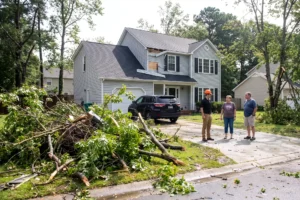
Trees present a different hazard. Healthy-looking branches can break under strong gusts, while dead limbs and weakened trees are even more likely to fall. A branch does not have to land directly on the roof to cause property damage. It can tear gutters away, strike siding, or damage a power line near the building.
What Makes Damage Worse
The severity of a storm matters, but the condition of the property matters too. Aging shingles, loose flashing, deteriorated sealant, unsecured outdoor furniture, and neglected trees give high winds more opportunities to cause damage. Thunderstorm downbursts and tropical storm gusts can exploit the same weaknesses, even though the weather systems are different.
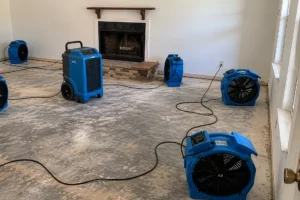
Wind can also turn an exterior problem into an interior one. Once roofing or siding shifts, rain may enter an attic, wall cavity, or ceiling. The resulting moisture damage may not become visible until after the storm has passed. A roof that looks mostly intact from the ground can still have lifted shingles or damaged flashing that need closer inspection.
Some vulnerabilities can be addressed through maintenance; others call for improvements to the building itself. Recommendations for reducing property damage from severe winds include strengthening vulnerable building components and protecting exterior openings. The right improvements depend on the structure and local wind exposure.
Preventing Wind Damage
No maintenance plan can make a property immune to severe weather. However, routine inspections and repairs can reduce avoidable risks, particularly before North Carolina’s thunderstorm and tropical storm seasons. Property owners can focus on these practical precautions:
- Have a qualified roofer inspect missing, curling, or loose shingles and check flashing around roof openings.
- Repair loose siding, fascia, soffits, gutters, and exterior trim before strong winds arrive.
- Ask a qualified tree professional to assess dead limbs, damaged branches, and trees near buildings or power lines.
- Secure or store patio furniture, grills, trash bins, signs, and other objects that could become airborne.
- Check exterior doors, windows, and garage doors for damage, weak hardware, or gaps that need attention.
- Keep gutters and downspouts clear so heavy rain has a path away from the building if wind accompanies the storm.
Do not climb onto a roof or attempt major tree work as a storm approaches. Tasks involving ladders, electrical hazards, or large branches should be handled by qualified professionals while conditions are safe.
After the Storm Passes
Begin with safety, not repairs. Stay away from downed power lines, hanging branches, fallen trees resting against structures, and areas where roof or wall damage may have made the building unstable. If you suspect a gas leak or another immediate hazard, leave the area and contact the appropriate emergency service.
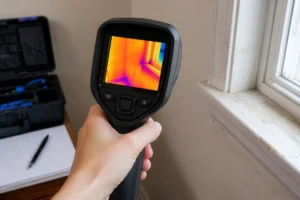
When it is safe, walk the property from the ground and photograph visible damage. Look for missing roofing materials, displaced flashing, loose siding, broken windows, damaged gutters, and fallen limbs. Inside, check ceilings and upper walls for new staining, dampness, or dripping water. Avoid assuming that no visible leak means no damage occurred.
A compromised roof deserves prompt attention. Depending on the damage, protecting a damaged roof after severe wind may involve temporary professional tarping to limit additional water intrusion while permanent repairs are arranged. The priority is securing exposed areas without putting anyone at risk on a wet or unstable roof.
Address the Damage Early
Wind damage is not always dramatic. A lifted roof edge, loosened siding panel, or small opening around flashing can be enough to let the next rainfall reach materials inside the building. Delaying an inspection may allow a manageable exterior repair to become a larger restoration project.
If a storm has damaged your home or business, CareMaster can help evaluate the affected areas and determine the appropriate next steps. Our professional storm damage repair services can help protect the property and move needed restoration work forward.