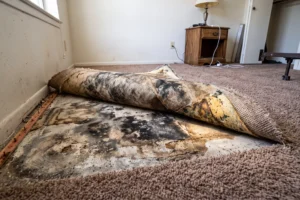
Yes, mold under carpet can develop when moisture remains trapped in the carpet backing, padding, or underlying floor. A spill, plumbing leak, flooding, or persistent dampness may leave the surface looking normal while materials underneath stay wet. Finding the moisture source and checking the layers below the carpet are essential to determining whether the flooring can be dried or needs to be removed.
Surfaces Can Be Misleading
Carpet usually has several layers, and they do not always dry at the same rate. The fibers on top may feel dry while the backing, carpet padding, and subfloor still hold moisture. A rug or carpet installed over concrete can also conceal damp conditions that are not obvious during a quick inspection.
That matters because mold beneath carpets and pads can remain hidden until an odor develops or the flooring is lifted. Visible mold on the carpet surface is not the only reason to investigate, and the absence of visible growth does not confirm that the materials underneath are dry.
Warning Signs Worth Investigating
A persistent musty smell is one clue, especially when it is strongest near the floor or returns after cleaning. Dark spots or discoloration along carpet edges, baseboards, or nearby walls may also warrant attention. In other cases, the first sign is a damp or spongy feeling underfoot long after a leak was supposedly resolved.
Not every stain or odor means mold is present. Old spills, dirt, and other residues can produce similar symptoms. However, recurring odors combined with a history of water intrusion make it important to check the carpet backing, padding, and floor beneath rather than repeatedly cleaning the visible surface.
Moisture meters and careful inspection can help determine where water has traveled. If substantial mold growth is suspected, lifting or disturbing affected materials without proper precautions can spread contamination into the room.
Find the Moisture Source First
A leaking supply line, overflowing appliance, rainwater entering around a door, or water trapped after a past flood can all leave moisture underneath carpet. Even a small leak along a wall may spread beneath the flooring before staining becomes visible.
Cleaning the carpet without addressing the source only delays the problem. The leak or moisture condition must be corrected, and the affected area must be evaluated for hidden water. If the carpet is installed over a wood subfloor, the condition of that wood is important as well. On concrete, moisture entering from below may require a different solution than a one-time indoor spill.
Can Mold Under Carpet Be Removed?
The answer depends on whether mold has developed, how long the materials stayed wet, and what type of water caused the damage. Carpet exposed to a recent clean-water leak may sometimes be professionally extracted and dried if action begins quickly and all affected layers can be dried completely.
Once mold is growing in the carpet backing or padding, however, cleaning the surface is unlikely to solve the problem. These porous materials can be difficult to clean thoroughly, and removal is often the more reliable option. Carpet and padding affected by sewage or contaminated floodwater should be discarded rather than reused.
A successful restoration decision considers the carpet, the padding, and the flooring below as separate materials. Saving one layer does not mean the others are automatically safe to keep.
Before Reinstalling Carpet
Mold under carpet can spread to subflooring, tack strips, baseboards, and even nearby drywall. If this happens and those affected areas remain untouched, replacing the carpet alone will not fix the problem.
The condition of the material and the extent of contamination determine whether cleaning is appropriate or replacement is necessary. Either way, damp or moldy materials must be addressed before new flooring is installed.
Avoid “Quick Fixes”
When it comes to mold under carpet, cleaning or even replacing the carpet may not be enough. CareMaster’s IICRC-certified mold remediation team is trained to identify the problem, fix the underlying issues, remove the mold, and prevent it from returning.