CareMaster recently responded to a flooded upstairs bathroom that caused water damage on both levels of a two-story townhome in Greenville, NC. An overflowing bathroom sink caused water to spread across the upstairs floor and down the staircase. The restoration process involved stopping the leak, tracing the moisture, extracting standing water, drying affected materials, and completing repairs throughout the damaged areas.
Multiple Floors Affected
The water began near the upstairs bathroom sink, but it did not stay inside the bathroom. It moved through the doorway, across the landing, and down the stairs toward the lower level. What started as a plumbing issue had become a water damage problem involving multiple parts of the home.
The visible water showed where the leak had traveled, not necessarily where it had stopped. Stair treads, flooring seams, baseboards, and wall materials can absorb moisture as water passes over or around them. That made it important to inspect the entire route rather than concentrate only on the bathroom floor.
Stopping the Sink Leak
Before cleanup could begin, the water supply to the affected sink had to be shut off. In this case, the individual shutoff valve could not be reached, so the home’s main water valve had to be used.
With the water source controlled, CareMaster could address the damage inside the townhome. The team documented visible conditions, checked for safety concerns, and moved vulnerable belongings away from wet areas where possible. These early steps helped keep the cleanup focused and reduced the chance of additional damage during restoration.
Beyond the Flooded Upstairs Bathroom
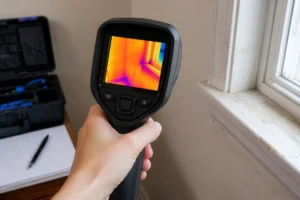
The next challenge was determining how far the moisture had traveled. CareMaster checked the bathroom and upstairs landing, then continued along the stairs and into the areas below. Moisture readings helped identify affected surfaces that looked dry from the outside.
Moisture mapping involves tracking water through walls and floors to define the full affected area. In a two-story townhome, that means checking more than flooring. Lower walls, trim, stair assemblies, and the ceiling beneath the bathroom may also need evaluation, depending on the water’s path.
By comparing readings across wet and unaffected materials, the team could plan drying around the actual moisture spread instead of relying on visible stains or puddles alone.
Extraction and Structural Drying
Once the affected areas were identified, the team removed accessible water from the floors and stairway. Where floor coverings or other materials retained moisture, technicians evaluated whether they could be dried in place or needed to be lifted or removed. Damaged baseboards or limited sections of drywall may also need to come out when moisture is trapped behind them.
After extraction, water damage cleanup and structural drying became the priority. Air movers encouraged evaporation from affected surfaces, while dehumidifiers removed excess moisture from the air. Equipment was positioned according to the layout and moisture readings, including areas beyond the original bathroom.
Drying was not considered complete simply because the stairs and floor felt dry to the touch. Technicians monitored moisture levels and adjusted equipment as needed until the affected materials reached acceptable drying conditions. That verification helped prevent repairs from covering up moisture still inside the structure.
Restoring the Damaged Areas
With drying complete, the townhome could move into repairs. That process started with confirming the sink leak had been corrected by a qualified plumber.
Water damage repairs should only begin once the source of the problem has been identified and addressed. Otherwise, the same issue could cause further damage in the future.
Affected insulation was dried or replaced, damaged drywall, baseboards, and flooring were repaired, and any wall openings created for drying were closed. Stairway finishes also needed attention where water had traveled between levels.
Documenting for Insurance
Photos from the initial inspection, moisture readings, drying records, and repair documentation can all be useful when an upstairs leak affects several rooms or levels. They help show why cleanup extended beyond the bathroom and what work was needed to return the property to its previous condition.
Homeowners may have coverage for sudden plumbing overflows, but the cause of the loss and the specific policy determine what is covered. Keeping a clear record of the damage and restoration work gives the homeowner information to share with the insurance company.
Help for Water Damage in Greenville
A flooded upstairs bathroom can send water throughout a home, affecting the floors below. If you’ve experienced water damage in Greenville, NC or surrounding areas, CareMaster can determine how far the damage extends and help restore the affected spaces. Contact our Greenville mitigation team before hidden moisture becomes a lasting problem.