A refrigerator leak can cause hidden water damage long before anyone sees water on the kitchen floor. In this Morrisville, NC case study, a leaking refrigerator supply line affected tile flooring, baseboards, drywall, and the wall cavity behind the appliance. By the time the damage was discovered, mold had developed along the lower wall, making professional cleanup, drying, removal, and documentation necessary.
How the Refrigerator Leak Was Discovered
The homeowner first noticed staining and moisture near the refrigerator area, then found visible damage after the appliance was moved away from the wall. What appeared to be a simple appliance leak had actually spread into the materials behind and beside the refrigerator. The wall showed heavy moisture staining, deteriorated drywall, damaged base trim, and visible mold growth near the lower section where water had been trapped.
Refrigerator leaks are often difficult to catch early because the water source is hidden behind the appliance. A small supply line leak, loose connection, or ice maker issue can drip for days or weeks without creating a dramatic puddle. Instead, water collects behind the appliance, under trim, along grout lines, and inside porous wall materials.
That slow pattern was the main issue in this Morrisville home. The leak did not create a large flood across the kitchen. It created a damp, enclosed area where water damage and mold had time to develop out of sight.
What the Damage Looked Like Behind the Refrigerator
Once the area was accessible, the extent of the damage became clearer. The affected wall had significant staining and microbial growth concentrated near the baseboard line and lower drywall. The refrigerator supply box and nearby wall materials also showed signs of prolonged moisture exposure.
The visible damage included:
- Mold growth on lower wall surfaces and around damaged drywall
- Deteriorated baseboards and trim near the refrigerator opening
- Moisture-affected drywall behind and beside the appliance
- Water staining and residue along the wall and floor line
- Potential hidden moisture behind finished materials and trim
The tile floor helped limit some surface absorption compared to carpet or wood, but it did not eliminate the risk. Water can still move through grout joints, under baseboards, and into wall cavities. That is why the cleanup required more than wiping the floor and letting the area air out.
Why Mold Changed the Cleanup Plan
A refrigerator leak is usually handled as a water damage cleanup first, but mold changes the response. When visible growth is present, the affected materials must be evaluated more carefully. Standard drying alone is not enough if mold-contaminated drywall, trim, or debris remains in place.
In this case, the priority was to control the work area, remove materials that could not be safely dried or cleaned, and dry the remaining structure properly. The goal was not to make the wall look better for a photo. The goal was to address the moisture source, remove contaminated materials, and reduce the risk of the problem returning.
For property owners, this is an important lesson. Mold behind a refrigerator is not always caused by poor housekeeping. Sometimes it is the result of a slow, hidden appliance leak that creates the right conditions behind the wall.
Cleanup and Drying Process
CareMaster approached the Morrisville refrigerator leak cleanup as a controlled water damage and mold-affected materials project. The process focused on identifying the moisture path, removing unsalvageable materials, drying the structure, and documenting the work for the homeowner and insurance process.
- The refrigerator was moved safely so the affected wall, floor line, and supply connection could be inspected.
- Moisture readings were taken around the appliance area, lower drywall, baseboards, and nearby flooring.
- Visible mold and deteriorated materials were contained and removed where necessary.
- Affected baseboards, damaged drywall sections, and debris were cleared from the work area.
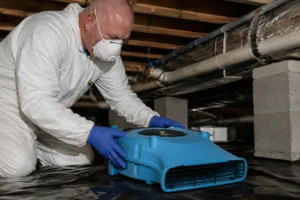
- Drying equipment was placed to control airflow and humidity around the affected kitchen area.
- Moisture levels were monitored so the drying plan could be adjusted as materials responded.
- Photos, notes, and readings were collected to support the restoration record.
This sequence helped separate what could be dried from what had to be removed. That distinction matters because leaving wet or mold-affected material in place can create recurring odor, staining, or microbial problems later.
How Documentation Helped the Claim
The homeowner also needed a clear record of what happened. For insurance purposes, documentation helps show the source of the loss, the affected materials, and the steps taken to prevent additional damage.
CareMaster documented the refrigerator leak, the visible wall damage, moisture readings, mold-affected areas, and the cleanup and drying process. This helped create a more complete picture than surface photos alone could provide.
If another appliance-related leak occurs, homeowners can also reduce confusion by keeping maintenance records, repair notes, and photos of the damage before cleanup begins. Basic refrigerator maintenance can help reduce certain appliance problems, but even well-maintained refrigerators can develop hidden water line leaks over time.
What This Morrisville Case Study Shows
This refrigerator leak cleanup in Morrisville, NC shows why appliance leaks should be taken seriously even when the floor does not look flooded. Water behind a refrigerator can affect drywall, trim, wall cavities, flooring edges, and nearby materials before the homeowner realizes anything is wrong.
It also shows why slow leaks often become more complicated than sudden spills. When moisture remains trapped behind an appliance, the damage can spread quietly and create conditions for mold growth. Once that happens, cleanup needs to address both the water damage and the contaminated materials.
For homeowners who have already dealt with a similar appliance issue, it may also help to review this related case study about a freezer leaking water and how hidden appliance leaks can affect nearby building materials.
Get Help Before a Small Leak Becomes a Larger Problem
If you discover a refrigerator leak, move carefully. Do not assume the damage is limited to the visible floor area, especially if there is staining, soft drywall, damaged trim, musty odor, or visible mold. CareMaster provides water damage cleanup services for appliance leaks, hidden moisture, and related property damage. Our team can inspect the affected area, remove damaged materials when necessary, dry the structure, and help you move forward with clearer next steps.