Ceiling water damage often starts as a small stain, soft spot, or discoloration before it spreads into drywall, insulation, framing, and nearby walls. Because the source may be above the ceiling, early inspection matters. Spotting the warning signs quickly can help homeowners identify a roof leak, plumbing issue, or hidden water damage before repairs become more extensive.
Why Ceiling Stains Shouldn’t Be Ignored
Water stains are easy to dismiss when they look small, especially if there is no active dripping. However, visible ceiling water damage often means moisture has already moved through another material before reaching the surface you can see.
Water may begin in an attic, bathroom, HVAC line, roof penetration, or upstairs plumbing fixture. From there, it can move across framing, insulation, and drywall seams before appearing as a stain. The goal is to find the moisture source, determine how far the water traveled, and dry affected materials before the damage spreads.
Common Signs of Ceiling Water Damage
Ceiling water damage does not always appear as an obvious brown circle. Sometimes the warning signs are subtle or show up in stages. Homeowners should pay attention to changes in color, texture, shape, and smell.
Common signs include:
- Yellow, brown, or copper-colored stains
- Bubbling, peeling, or flaking paint
- Sagging or bowed ceiling sections
- Soft drywall or texture that crumbles when touched
- Musty odors near the affected room
- Cracks or seams that appear darker after rain
- Recurring spots that return after being cleaned or painted
A small stain does not automatically mean a major loss, but it does deserve attention.
Where the Water May Be Coming From
Finding the source of ceiling water damage depends on what sits above the affected area. In a one-story home, the source may be the roof, attic, ductwork, or overhead plumbing. In a two-story home, it may come from an upstairs bathroom, laundry room, water heater, or supply line.
A roof leak is common after heavy rain, wind, damaged shingles, failing flashing, or worn vent boots. Water can enter the attic and travel along rafters before dripping onto insulation or drywall far from the entry point.
Plumbing is another frequent source. Toilet supply lines, tub drains, shower valves, and sink connections can leak slowly above finished ceilings. HVAC systems can also contribute when condensate drains clog or ductwork sweats during humid North Carolina summers.
Why Hidden Moisture Is the Bigger Concern
The stain on the ceiling is only the clue. The real concern is hidden water damage above or around it. Wet insulation can hold moisture against drywall. Damp framing can remain wet even after the ceiling surface dries. If humidity stays elevated, mold may become a concern.
Homeowners should fix the source of the water problem as part of moisture control. This matters because drying the visible surface without correcting the source usually leads to repeat damage.
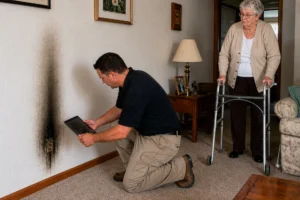
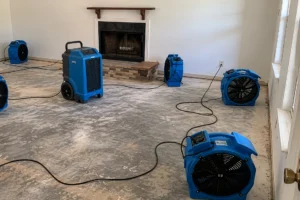
A professional inspection can help determine whether moisture is still active. Restoration technicians may use moisture meters, thermal imaging, and controlled access points to check the affected area without unnecessary demolition. When ceiling materials are saturated, water damage cleanup services may be needed to dry the structure safely and prevent further spread.
What Homeowners Should Do First
If you notice a ceiling stain or soft spot, avoid poking, cutting, or opening the area without understanding the risk. A sagging ceiling may hold trapped water and can release suddenly. If the ceiling appears unstable, stay clear of the area and contact a professional.
For smaller warning signs, take clear photos and note when the stain appeared. If it gets darker during rain, a roof leak may be involved. If it appears after showers, laundry use, toilet flushing, or heavy air conditioning, plumbing or HVAC condensation may need to be checked.
You can also compare the issue with other signs of hidden water damage to see whether moisture may be affecting nearby walls, flooring, or trim.
Reduce the Chance of Future Ceiling Damage
Prevention starts with routine attention to areas above finished ceilings. Homeowners can reduce risk by:
- Inspecting ceilings after heavy rain
- Watching for stains below bathrooms or laundry areas
- Replacing worn supply lines before they fail
- Keeping HVAC condensate lines clear
- Checking attic areas for wet insulation or roof staining
- Addressing small leaks before they spread
It also helps to decrease humidity in your home so damp materials are less likely to stay wet after minor moisture problems.
Take Action Before It Spreads
Ceiling water damage should be treated as an early warning sign, not a cosmetic flaw. A small stain may point to a roof leak, plumbing problem, HVAC issue, or hidden moisture that needs attention before it affects more of the structure. If you notice staining, sagging, peeling paint, or a recurring damp spot, CareMaster can inspect the damage, identify affected materials, and help dry and restore the area before the problem grows.