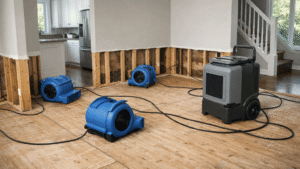
Spring flood preparation helps North Carolina homeowners reduce water damage risk before heavy rain, rising creeks, or saturated ground create problems. The goal is simple: protect your home from flooding by planning ahead, securing vulnerable areas, and building an emergency kit that supports quick action if conditions worsen.
Why Spring Flood Preparation Matters in North Carolina
Spring weather in North Carolina can shift quickly. A few days of steady rain can overwhelm drainage systems, soften the ground around foundations, and push water toward crawl spaces, garages, and entry points. Homes do not need to sit in a designated flood zone to experience damage. Poor grading, clogged gutters, low-lying yards, and backed-up storm drains can all contribute to flooding during seasonal storms.
That is why spring flood preparation should start before the forecast turns ugly. Once water is already moving toward the house, your options shrink fast.
Where Water Usually Gets In
Floodwater does not always enter through one dramatic opening. More often, it finds the weak spots a homeowner has not thought about in months.
Common trouble areas include:
- Basement doors and thresholds
- Crawl space vents
- Garage doors
- Ground-level windows
- Cracks in foundation walls
- Poorly sealed utility penetrations
- Overflowing gutters and downspouts that dump water too close to the house
A good inspection now can reveal where small corrections may prevent a much larger mess later.
How to Protect Home From Flooding Before Storms Arrive
If you want to protect your home from flooding, focus on the parts of the property that control water flow. Start with the exterior. Clear leaves and debris from gutters, downspouts, and drains so rainwater can move away from the structure instead of pooling near it.
Next, look at grading. Soil should slope away from the home, not toward it. If water tends to collect near the foundation, extending downspouts or reworking drainage paths may help. Sandbags can also provide short-term protection around doors and low openings when heavy rainfall is expected, but they work best as one layer of preparation, not the whole game plan.
Inside the home, move valuables, electronics, and important documents off the floor in vulnerable rooms. Waterproof bins are useful for storage, especially in garages, lower levels, and closets near exterior walls.
Build an Emergency Kit That Is Actually Useful
An emergency kit sounds like one of those things people mean to do and then promptly forget until the sky turns green. Build one anyway. It is one of the simplest ways to reduce chaos during a flood warning.
Your kit should include basic supplies such as bottled water, flashlights, batteries, medications, phone chargers, first aid items, and copies of key documents in a waterproof container. It should also include practical flood-related items like rubber gloves, towels, a battery-powered radio, and contact information for your insurance company and restoration professionals.
Reviewing emergency kit and evacuation planning resources can help you fill gaps and think through details most people overlook.
Do Not Ignore Insurance and Documentation
Flood preparation is not only about stopping water. It is also about reducing friction after a loss. Take photos of the exterior, major rooms, and valuable belongings before storm season ramps up. That gives you a clean record of pre-loss conditions if you ever need to file a claim.
Homeowners should also review their insurance policies before spring storms arrive. Standard homeowners coverage does not always include flood-related damage from rising water. Knowing what your policy does and does not cover now is much better than learning it while standing in wet socks and trying not to swear at the ceiling.
When to Act Immediately
Some warning signs mean preparation time is over and response time has begun. If you notice water pooling against the home, seepage near the foundation, overflowing gutters during moderate rain, or dampness in a crawl space after storms, do not brush it off. Those issues often point to drainage failures that can get worse with the next system.
If flooding or storm-related water intrusion does occur, fast mitigation matters. Prompt cleanup, drying, and assessment help limit structural damage and reduce the chance of secondary problems. In more serious cases, professional storm damage repair services may be necessary to stabilize the property and begin recovery properly.
Get Ahead of the Next Storm
Spring flood preparation is really about buying yourself options. When the gutters are clear, the drainage is working, the emergency kit is ready, and the vulnerable areas are protected, you are in a far better position to respond calmly and protect what matters. If your home has already shown signs of water intrusion or you want experienced guidance before the next major rain, CareMaster can help you assess the risk and take smart steps before minor weaknesses become major damage.