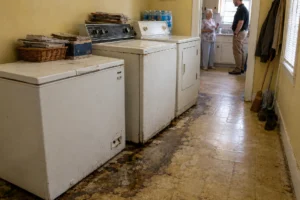
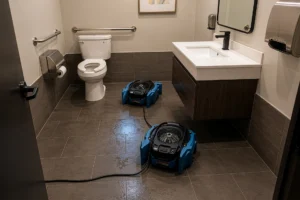
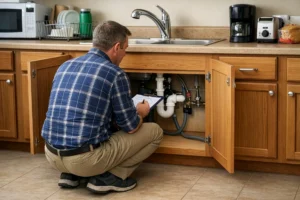
When a powerful tropical storm lingered over Jacksonville, NC, bringing days of heavy rainfall, localized flash flooding left one homeowner dealing with a garage flood. Water entered the garage, damaging drywall, insulation, and stored belongings. CareMaster responded to assess the damage, remove floodwater, dry affected materials, and restore the property.
The Initial Floodwater Breach
Heavy rainfall from the tropical storm overwhelmed drainage in the area, causing localized flash flooding. Water traveled under the garage door and across the concrete slab, affecting the walls and stored belongings. Once the water receded, damp surfaces and debris remained throughout the affected space.
Garage doors can be a major weak point during flooding, especially when they lack proper flood protection. Rising water can seep through gaps beneath and around the door, allowing it to spread throughout the garage. Once inside, floodwater can saturate drywall and insulation, damage vehicles, and ruin stored belongings.
For this homeowner, professional water damage restoration involved more than simple water extraction. CareMaster needed to determine how far the water had traveled before deciding what could be cleaned, dried, or repaired.
Safety Before Cleanup
Floodwater can contain dirt, bacteria, chemicals, and other contaminants picked up outdoors. That’s why the team approached the garage flood with extra caution given the water source. Electrical safety was another concern because outlets, stored appliances, and equipment may have been exposed to water. Affected electrical components needed to be treated as unsafe until appropriately checked.
CareMaster documented the visible damage and used moisture readings to evaluate the lower walls and other materials surrounding the flooded area. This initial assessment established which areas required extraction, removal, cleaning, and structural drying.
What the Garage Flood Affected
The garage served as both parking and storage space, so the inspection had to account for building materials as well as personal belongings. The main areas of concern included:
- Lower sections of drywall and the insulation concealed behind them
- Boxes, tools, furniture, and other belongings stored near the floor
- Outlets and electrical equipment located near the affected areas
- The concrete slab, shelving, and surfaces coated with dirt or flood residue
Not everything exposed to floodwater can be handled the same way. Hard, nonporous items may be cleaned when appropriate, while contaminated porous materials may need to be discarded. The team evaluated the contents off-site while the garage flood cleanup was underway.
Removing Water and Damaged Materials
CareMaster began by extracting the remaining water and clearing debris from the garage. Removing standing water was essential, but it was only the first part of mitigation. Water had also reached wall materials that could hold moisture long after the floor appeared dry.
The team opened affected sections of the lower walls where needed and removed wet insulation and drywall that could not be safely restored. Water-damaged belongings were also removed and assessed to determine what could be salvaged. Items suitable for restoration were transported to CareMaster’s Greenville facility for professional cleaning.
Unlike a clean-water supply leak, a garage flood brings additional concerns. Understanding contamination risks after a flood helps explain why some materials and items must be disposed of.
Structural Drying
With damaged materials removed and the affected surfaces cleaned, CareMaster could focus on drying the remaining structure. Air movers and dehumidifiers helped remove moisture from exposed framing, the slab, and surrounding areas. Technicians checked moisture levels throughout the process rather than relying on surface appearance alone.
Proper cleaning and drying after flooding means dealing with both visible residue and moisture trapped in building materials. Drying equipment cannot make contaminated insulation safe to keep, and new drywall should not cover framing that is still wet.
Once the remaining materials reached acceptable moisture levels, the space was ready for repairs. That sequence reduced the risk of closing up damp cavities and having problems surface later.
Rebuilding a Usable Garage
The repair phase addressed the sections of the garage affected by flooding. Damaged insulation and drywall were replaced where necessary, and restored surfaces were prepared for finishing. Contents that were able to be restored were packed up and returned to the homeowners.
The project involved more than cleaning up visible damage. Because the flooding involved black water, CareMaster followed additional safety, removal, and sanitation procedures to address contamination and help restore the garage to a safe, usable condition.
Get Help After a Flood in Jacksonville, NC
Flash flooding can leave damage behind walls and inside stored belongings even after the standing water disappears. If your property has flooded, CareMaster offers flood damage restoration in Jacksonville, NC and surrounding Onslow County areas. Contact our team to get the affected areas evaluated and take the next steps toward recovery.