A grease fire should never be put out with water. The best response is to turn off the burner—if you can do so safely—cover the pan with a metal lid or baking sheet, and leave it covered until it cools. If the flames spread or the situation feels unsafe, evacuate and call 911.
Grease Fire First Response
According to the National Fire Protection Association, cooking is the leading cause of residential fires, with ranges or cooktops accounting for over half of those incidents. If grease catches fire while cooking, a quick but controlled response is essential:
Keep the pan still.
Grabbing the pan during a grease fire is a bad idea. Doing so can cause burning grease to spill out, spreading flames across the kitchen. Do not attempt to carry the pan to the sink or outside.
Turn off the heat.
If you can reach the burner controls without leaning over the fire, turn the burner off. Removing the heat source helps stop the oil from getting hotter. If you cannot reach the controls safely, step away and leave the home.
Cover the flames.
If the fire is still small and contained to the pan, slide a metal lid or baking sheet over the cookware. This helps smother the flames by cutting off oxygen. Once the pan is covered, leave it alone until it is completely cool.
What Not to Do
Never use water to put out a grease fire. When water comes into contact with hot, burning oil, it forces the oil outward. This reaction can spread flames across the stovetop, cabinets, walls, counters, and flooring.
Water can turn a small grease fire into a much larger kitchen fire.
Other quick fixes can be dangerous too. Flour, sugar, paper towels, dish towels, and baking powder can burn or scatter. A small amount of baking soda may help with a very small pan fire, but it should not be treated as the main plan if flames start growing.
When to Leave
Some kitchen fires are too dangerous to handle without professional help. Exiting the structure and contacting emergency services is the safer approach if:
Smoke is building.
If smoke is filling the kitchen or making it hard to breathe, leave the home. Smoke inhalation can become dangerous quickly, even if the flames still look small.
Flames are spreading.
When a small pan fire reaches nearby cabinets, curtains, appliances, walls, or flooring, things can quickly get out of hand. The priority should shift from containment to evacuation.
You are unsure.
If there is any doubt, leave and call 911. It’s better to play it safe than to risk trying to handle it yourself.
Using a Fire Extinguisher
A fire extinguisher can help with some kitchen fires, but only when it is close by, appropriate for the fire, and safe to use.
Many homes have multi-purpose extinguishers. Commercial kitchens often use Class K extinguishers designed for cooking oils and fats. In either case, the extinguisher only helps if the person using it knows how it works and has a clear exit path behind them.
If using an extinguisher means standing in heavy smoke, reaching over burning grease, or blocking the way out, evacuation is safer.
After the Flames Are Out
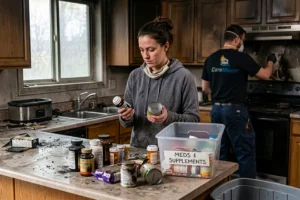
If not contained quickly, grease fires can leave behind smoke residue, odors, and structural damage that ordinary cleaning may not fully address. CareMaster’s fire restoration team can help evaluate the situation and determine the best course of action for cleanup, odor removal, and repairs.
If damage is minimal, you may be able to handle cleanup yourself. Just make sure to use the right cleaning products and techniques, as the wrong approach can smear soot, set stains, or push smoke odors deeper into porous materials.
In many cases, food exposed to fire damage may need to be discarded, even when the packaging looks intact. Heat, smoke, soot, and fire extinguisher residue can affect pantry items, cooking oils, spices, boxed foods, and items stored in nearby cabinets.