Fire sprinkler water damage can spread quickly in a hotel because water does not stay in one room. In this Holly Springs, NC case, a damaged sprinkler head released water on an upper floor before the system could be shut off. What started as one failed component became a multi-floor commercial water damage loss involving guest rooms, hallway areas, ceilings, walls, and flooring below.
How One Sprinkler Head Affected Several Floors
The loss began when a fire sprinkler head on the fourth floor was accidentally damaged during maintenance. Water poured into the guest room and nearby hallway for several minutes before the system could be shut off.
In a hotel, that kind of water release can move fast. Water can soak carpet and padding, run along walls, enter wall cavities, pass through floor assemblies, and drip into rooms below. By the time the water is stopped, the damage may already extend far beyond the original room.
In this case, water from the fourth floor migrated into affected areas on the third and second floors. The source was small, but the restoration scope was not.
Why Sprinkler Water Damage Needs Fast Response
Fire sprinkler systems are designed to protect buildings during a fire, but accidental activation or component failure can release a large amount of water in a short amount of time. A hotel has extra risk because rooms are stacked vertically, and water can travel through ceilings, walls, insulation, flooring systems, and mechanical openings.
That is why water damage mitigation needs to begin quickly. The first priorities are stopping the water source, extracting standing water, identifying how far moisture traveled, and protecting unaffected areas from additional damage.
Even after the visible water is removed, wet carpet padding, drywall, insulation, and ceiling materials may still hold moisture. If those materials stay wet too long, the hotel may face odor, material breakdown, and mold concerns.
What CareMaster Found During the Inspection
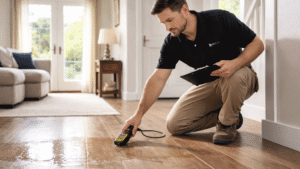
CareMaster inspected the affected hotel areas to determine where the water traveled and which materials were still wet. Moisture mapping was especially important because water had moved between floors.
The inspection included affected guest rooms, the original fourth-floor room, hallway areas, ceilings below the source, wall cavities, flooring, trim, and nearby contents. Some water damage was visible right away, but other moisture was hidden behind walls, under carpet, or above ceiling materials.
This step helped separate the obvious damage from the full drying scope. Without moisture mapping, a hotel could reopen or repair rooms while hidden moisture remains trapped behind finished surfaces.
The Restoration Plan
The most important step after the sprinkler release was stopping the immediate water damage. Once the water was under control, CareMaster extracted standing water, removed damaged materials, dried affected spaces, and guided the repair process.
CareMaster’s response included:
- Emergency water extraction from affected flooring
- Removal of wet carpet, padding, drywall, and insulation where materials could not be dried in place
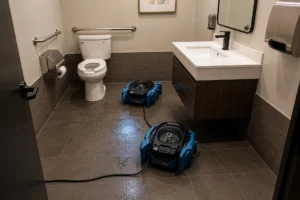
- Structural drying with air movers and dehumidifiers
- Moisture mapping across several floors
- Drying and evaluation of affected furniture and contents
- Monitoring for mold risk where materials had stayed wet too long
This process helped prevent the damage from being treated as a surface-level cleanup. In a multi-floor hotel loss, water can continue causing problems long after the hallway carpet looks dry.
Why Commercial Water Damage Is Different in a Hotel
A hotel water damage loss affects more than building materials. It can interrupt room availability, guest scheduling, staff routines, housekeeping plans, maintenance work, and revenue. Even a limited sprinkler release can take multiple rooms out of service if water moves through ceilings and walls.
That is why timing matters. The faster the affected areas are extracted, mapped, dried, and repaired, the sooner the hotel can begin returning rooms to service.
How Sprinkler Failures Can Happen
Fire sprinklers may fail or activate unexpectedly for several reasons. Accidental impact, freezing, corrosion, improper maintenance, damaged heads, or pressure issues can all create problems. Knowing why fire sprinklers often fail can help property managers understand why regular inspection and careful maintenance matter.
In this hotel case, the damaged sprinkler head created a much larger restoration need than many people would expect. The lesson is simple: when sprinkler water travels between floors, the cleanup should be treated as a building-wide moisture issue, not just a wet room.
From Water Disaster to Restored Business
For hotels and other commercial properties, sprinkler water damage requires quick action and careful documentation. CareMaster provides emergency restoration services in Holly Springs, Raleigh, and surrounding Wake County areas. If your business experiences any type of water damage, whether from fire sprinkler failures, plumbing leaks, storms, or other events, we can help restore your property and get back to normal business operations quickly and efficiently.