A laminate floor may be water resistant enough to handle minor spills, but it is not built to tolerate standing water for long. Water can seep through seams, edges, transitions, or damaged planks and reach the core underneath. Once that happens, the flooring may swell, separate, buckle, or trap moisture below the surface.
What Water Resistant Means for Laminate Flooring
Water resistant laminate can usually handle small spills if they are cleaned up quickly. A dropped drink, wet shoes, or a few splashes near a sink may not cause damage if the water stays on the surface and is removed right away.
The problem is that water resistance has limits. Laminate flooring is made in layers, and the core is usually more vulnerable than the top wear layer. If water reaches the seams or gets under the planks, the floor may begin absorbing moisture from below or between boards.
That is why a laminate floor can look fine at first and still have moisture problems developing underneath.
Water Resistant Is Not the Same as Waterproof
Some laminate products are marketed as waterproof or water resistant, but homeowners should read those claims carefully. The product may resist spills from above, but that does not always mean it can survive standing water, flooding, appliance leaks, or moisture trapped underneath.
Water can enter laminate flooring through several weak points:
- Seams between planks
- Gaps around walls and baseboards
- Doorways and transitions
- Scratched or damaged planks
- Areas where the floor was cut during installation
- Moisture coming from below the flooring
If you are choosing new flooring for a kitchen, laundry room, bathroom, or entryway, reviewing tips for buying waterproof laminate flooring can help you compare product claims, installation requirements, and warranty limits before assuming a floor is safe for wet areas.
What Water Damage Looks Like on Laminate Floors
Laminate floor water damage does not always look dramatic right away. Sometimes the first signs are subtle, especially if moisture entered through a seam or sat below the planks.
Watch for changes such as raised seams, soft spots, bubbling, cupping, edge swelling, gaps between planks, discoloration, or a musty smell near the floor. The floor may also make new sounds when walked on if the underlayment or subfloor has been affected.
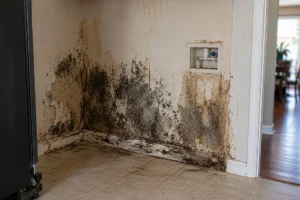
In some cases, the top of the laminate dries while moisture remains underneath. That trapped moisture can affect underlayment, subflooring, baseboards, and nearby walls.
What to Do After a Spill or Leak
For a small surface spill, clean it up quickly with a dry towel. Do not let water sit, and avoid using steam mops or excessive water when cleaning laminate. The goal is to remove moisture before it reaches the seams.
If the water came from a larger leak, appliance failure, toilet overflow, roof leak, or storm damage, the response should be more careful. Standing water should be removed as soon as possible, but the floor also needs to be checked for hidden moisture.
Homeowners should avoid assuming the floor is dry just because the surface looks normal. Laminate can hide moisture below the planks, especially near cabinets, walls, thresholds, and appliances.
When Professional Drying May Be Needed
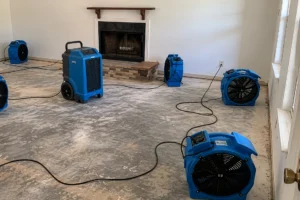
Professional drying may be needed when water has sat on the floor, spread across multiple rooms, reached the edges of the laminate, or come from a questionable source. It may also be needed if there are signs of swelling, odor, soft spots, or moisture near baseboards.
CareMaster’s water damage restoration team can help property owners identify affected areas, extract standing water, check moisture levels, dry nearby materials, and determine whether laminate flooring can remain in place or needs removal.
This is especially important because laminate flooring may not always be salvageable after water reaches the core. If planks are swollen, warped, or separating, drying alone may not restore them to their original condition.
How Laminate Differs From Hardwood
Laminate and hardwood can both be damaged by water, but they do not respond the same way. Hardwood is a natural material that may cup, crown, stain, or swell when moisture enters the wood. Laminate is a layered product, so damage often involves swelling, seam separation, delamination, or failure of the core.
Water also affects hardwood flooring differently because solid wood may sometimes be dried, sanded, or repaired depending on the severity of the damage. Laminate usually offers fewer repair options once the core has swollen or separated.
That difference matters when deciding whether to dry, remove, or replace affected flooring.
Protect Laminate Floors From Water Damage
A laminate floor can be a practical choice for many areas of the home, but it should not be treated as immune to water damage. Clean spills quickly, watch appliance connections, use mats near entryways, and pay attention to raised seams or soft areas after leaks.
If your laminate floor has been exposed to standing water or hidden moisture, CareMaster can inspect the affected area, check for moisture below the surface, dry nearby materials, and help determine the next step. Fast action can reduce the chance of deeper water damage and prevent a small flooring problem from spreading into surrounding materials.