Smoke damage can affect food, medicine, fabrics, electronics, furniture, and everyday household contents even when flames never touch those items directly. After fire damage, some belongings may be cleaned and restored, but others should be thrown away because heat, soot, odor, or contamination can make them unsafe or impractical to keep.
Damage Is Not Limited to the Burn Area
After a fire, it is natural to focus on what looks burned. The harder part is deciding what to do with items that look mostly intact but were exposed to smoke, soot, heat, or firefighting efforts. Smoke particles can travel through rooms, settle into porous materials, enter cabinets, and leave residue on surfaces far from the original fire.
Cleanup decisions should not be based on appearance alone. Some items can be professionally cleaned, deodorized, and returned. Others may need to be documented and discarded. The difference depends on the material, the level of exposure, the item’s use, and whether it can be safely cleaned.
Items You Should Usually Throw Away
Some belongings are more likely to absorb smoke residue or become unsafe after fire damage. If there is any doubt, document the item before disposal and ask your restoration team or insurance adjuster how it should be handled.
Items homeowners often need to throw away after smoke damage include:
- Opened food packages, including pantry items exposed to soot or odor
- Food stored in cardboard, paper, thin plastic, or porous packaging
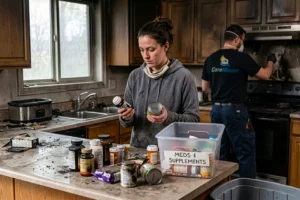
- Medicine, vitamins, supplements, and personal care items exposed to heat or smoke
- Baby items such as bottles, pacifiers, nipples, and certain soft goods
- Heavily smoke-damaged pillows, mattresses, and upholstered items
- Cosmetics or hygiene products that may have been contaminated
- Items with strong smoke odor that remains after proper cleaning attempts
This does not mean every item in these categories is handled the same way. It means they deserve careful review because smoke contamination can affect safety, odor, and usability.
Why Food and Medicine Need Extra Caution
Food and medicine are two categories where caution matters most. Heat, smoke, fumes, and firefighting chemicals can compromise these items, even if they appear unaffected.
Unsealed food, along with food stored in permeable containers such as cardboard boxes or thin plastic packaging, should usually be thrown away after a fire. Refrigerated and frozen food may also need to be discarded if the appliance loses power or shows signs of fire damage.
Consider replacing any medications or supplements that show signs of smoke damage or may have been exposed to high temperatures, since excessive heat can reduce their effectiveness.
What May Be Restorable
Not everything affected by smoke damage needs to be thrown away. Hard, non-porous items often have better restoration potential than soft, absorbent materials. Glass, metal, ceramic, some sealed plastics, and certain household goods may be cleanable depending on the amount of soot, odor, and heat exposure.
Soft goods are more complicated. Clothing, curtains, linens, rugs, and upholstered items may be salvageable if the smoke exposure is limited and the material can tolerate professional cleaning. However, heavy soot, deep odor, or contamination may make restoration unrealistic.
Hard Contents
Dishes, tools, decor, and some durable household items may be cleaned using appropriate methods.
Soft Contents
Textiles and fabrics may require specialized laundering, deodorization, or replacement depending on exposure.
Sentimental Items
Photos, keepsakes, artwork, and heirlooms should be reviewed before being discarded.
Electronics Need a Separate Review
Electronics should not be plugged in, charged, or tested after smoke damage until they have been evaluated. Soot can enter vents, ports, fans, seams, and internal components. Because soot residue may be acidic and difficult to remove, powering on a device too soon can create safety concerns or worsen the damage.
Items such as laptops, TVs, gaming systems, small appliances, chargers, and office equipment should be documented and separated for review. Property owners dealing with fire-damaged electronics should avoid guessing and let qualified professionals help determine what may be cleaned, restored, or replaced.
How Contents Restoration Can Help
Sorting through belongings after fire damage can be overwhelming, especially when smoke odor spreads into rooms that were not directly burned. Contents restoration helps bring order to that process. A professional team can help document affected items, separate salvageable from non-salvageable belongings, clean restorable contents, and support the insurance claim with clearer records.
CareMaster’s fire and smoke damage repair services include support for smoke cleanup, affected contents, odor concerns, and restoration planning. The goal is not to throw away everything. The goal is to make safe, informed decisions about what should be cleaned, restored, documented, or replaced.
Make Safer Decisions After Smoke Damage
After smoke damage, the safest approach is to slow down, document affected belongings, and avoid using items that may be contaminated. Food, medicine, hygiene items, and heavily porous materials often need to be thrown away, while many hard contents, textiles, sentimental items, and electronics may require professional review first.
If your home or business has experienced fire damage, CareMaster can help you sort through the damage, protect what may be restorable, and move forward with a clearer recovery plan.