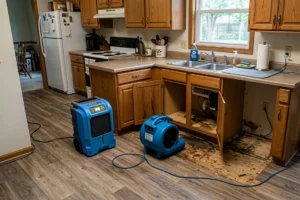
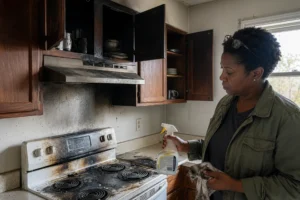
A large loss insurance claim usually involves major property damage, high repair costs, complex documentation, and multiple parties working through the recovery process. These claims often follow major water, fire, storm, or commercial property damage and may require emergency mitigation, contents handling, reconstruction planning, and detailed communication with the insurance carrier.
What Makes a Claim Large
A claim is not considered large only because the damaged area looks dramatic. The size of the claim usually depends on the cost, scope, complexity, and amount of documentation required to restore the property. A single-room loss may be straightforward, while damage affecting structural materials, business operations, contents, or multiple areas of a building can quickly become more involved.
Large losses often require coordination between property owners, insurance adjusters, restoration companies, specialty contractors, and sometimes engineers or environmental professionals. CareMaster provides large loss claims assistance for situations where the damage is too complex for a simple cleanup or repair process.
Residential vs. Commercial Losses
Large loss claims can happen in homes, apartment buildings, offices, schools, medical facilities, warehouses, retail spaces, and industrial properties. In a home, a large loss may involve a major fire, widespread water damage, or storm damage that affects multiple rooms. In a commercial setting, the claim may also include business interruption concerns, equipment damage, inventory loss, tenant communication, or safety planning.
Commercial property damage is often more complicated because the building may need to stay partially operational during cleanup. A restoration plan may have to account for employee access, customer safety, inventory protection, utilities, code requirements, and phased repairs. These details can affect the timeline and the insurance claim.
Why Documentation Matters
A large loss insurance claim depends on clear documentation from the beginning. Photos, moisture readings, equipment logs, affected material notes, contents inventories, demolition records, and repair recommendations all help explain what happened and what work was necessary.
Documentation also helps reduce confusion. When several rooms, floors, buildings, or business areas are involved, details can become difficult to track. Clear records give the property owner, adjuster, and restoration team a shared reference point.
While filing an insurance claim, property owners may need to provide information about the damage, the timeline of the loss, and the steps taken to prevent additional damage. A large claim benefits from organized records because the scope can change as hidden damage is discovered.
The Mitigation Phase
The first phase of a large loss is usually mitigation. This is the work done to reduce additional damage before full repairs begin. Depending on the loss, mitigation may include:
- Water extraction
- Structural drying
- Emergency board-up and tarping
- Debris removal
- Smoke and soot cleanup
- Odor control
- Contents packout and storage
- Temporary power
- Climate control
Mitigation is not the same as final repair. Its purpose is to stabilize the property, protect salvageable materials, and create a safer path for the rest of the restoration process. In many large claims, the mitigation phase also reveals more information about the true scope of damage.
Scope and Reconstruction
After mitigation, the next challenge is understanding what must be repaired, replaced, cleaned, or rebuilt. This may include drywall, insulation, flooring, roofing, framing, electrical systems, cabinets, fixtures, contents, and specialty materials. Some areas may be restorable. Others may need demolition and reconstruction.
A clear scope helps prevent delays. If repairs begin before the full damage is understood, finished areas may need to be reopened later. That can create additional costs, scheduling problems, and claim complications.
Large losses also require careful sequencing. Drying may need to finish before drywall can be replaced. Contents may need to be removed before flooring can be addressed. Inspections may be required before certain repairs can move forward.
Deductibles and Claim Planning
The deductible is another important part of planning for a large loss insurance claim. Property owners should understand how their deductible applies, whether separate deductibles may be involved, and what costs may not be covered. This is especially important for commercial property damage, where the final claim may involve multiple categories of work.
Before major decisions are made, it may help to review property damage deductibles so there is less confusion about out-of-pocket responsibility and claim expectations.
When to Call for Help
A large loss should be treated as a coordinated recovery project, not a simple repair. The earlier a qualified restoration team is involved, the easier it is to document conditions, protect materials, communicate with stakeholders, and begin mitigation.
If your home, business, or commercial property has suffered major water, fire, smoke, storm, or structural damage, CareMaster can help assess the loss, document the damage, coordinate mitigation, support contents handling, and move the restoration process forward. Contact our team for large loss support before cleanup, repairs, and insurance decisions become harder to manage.