Roof leak repair cost after water damage depends on more than the visible roof problem. The final cost can change based on how the leak started, how long water was present, what materials were affected, and whether hidden moisture reached ceilings, insulation, walls, flooring, or contents inside the home.
The Cost Starts With the Source
A roof leak repair usually begins with finding where water entered the home. The source may be a missing shingle, damaged flashing, failed pipe boot, storm-damaged roof surface, clogged gutter, or worn roof penetration. Until the source is corrected, interior repairs may not last.
The exterior roof repair and the interior water damage repair are often handled as separate parts of the same loss. A roofer may address the roof opening, while a restoration team handles the affected ceiling, walls, insulation, flooring, or contents. CareMaster’s water damage cleanup services can help assess the interior damage and begin mitigation before the problem spreads.
What Drives the Price
The biggest cost differences usually come from the amount of water that entered the home and how many materials were affected. A small stain from a recent leak may require limited drywall repair and painting. A long-term roof leak may require demolition, advanced drying, or even complete roof replacement, depending on the source and extent of the damage.
Common factors that can affect roof leak repair cost include:
- How long the leak was active
- Whether the source has been repaired
- The size of the stained or damaged area
- Wet insulation above ceilings or inside walls
- Damage to drywall, trim, flooring, or cabinets
- Moisture near electrical fixtures or HVAC components
- The need for drying equipment or demolition
- Whether contents were affected by water damage
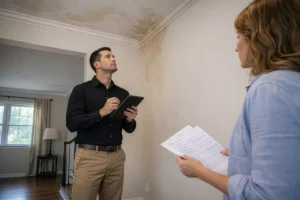
These factors make it difficult to estimate the full cost from a ceiling stain alone. The visible mark often shows where water surfaced, not everywhere it traveled.
Hidden Moisture Changes the Scope
Roof leaks can move along framing, wires, insulation, and ceiling materials before they show up indoors. A stain in one room may come from an entry point several feet away. Water can also remain trapped above drywall or behind finished surfaces after the surface appears dry.
This is where moisture detection matters. Restoration technicians use readings and inspection tools to determine whether materials can be dried or need to be removed. If repairs begin while materials are still wet, the finished area may need to be opened again later. That can raise costs and delay the project.
Prompt action can keep the scope from expanding. When homeowners need to make repairs after water damage, stopping the source, documenting conditions, and beginning mitigation early can reduce the chance of secondary damage.
Materials Matter
Not all building materials respond to water the same way. Drywall may soften or stain. Insulation can hold moisture. Wood trim may swell. Flooring can cup, separate, or trap water underneath. Cabinets, textured ceilings, and older finishes can make repairs more complicated.
A limited repair may involve cutting out damaged drywall, drying the cavity, replacing insulation, finishing the surface, and repainting. A larger repair may include multiple rooms, matching older finishes, protecting contents, and coordinating trades after drying is complete.
Older homes can also affect roof leak repair cost. Previous repairs, layered materials, hard-to-match finishes, or hidden damage can make the final scope clearer only after inspection and removal begin.
Documentation Helps the Claim
Insurance documentation is especially important when a roof leak is tied to storm damage or sudden water intrusion. Helpful documentation may include:
- Photos of roof, ceiling, wall, and flooring damage
- Moisture readings from affected materials
- Notes on wet insulation or hidden moisture
- Records of removed materials
- Drying equipment placement
- Repair recommendations
- Contents or personal property notes
- Communication with the insurance adjuster
Good documentation helps explain what happened, what areas were affected, and what work was needed to prevent further damage.
Repairs Come After Drying
Interior repairs should wait until the affected materials are dry or removed. Repainting a stained ceiling too early may hide the problem without fixing it. Installing new drywall over damp framing or insulation can also create future odor, staining, or microbial concerns.
Once drying is complete, repairs may include new insulation, drywall replacement, texture matching, trim work, painting, flooring repair, and final cleanup. The size of the repair depends on the confirmed moisture map, not just the area that looked damaged at first.
Get a Clear Assessment
If a roof leak has caused water damage inside your home, the safest next step is to have the affected area inspected before judging the cost. CareMaster can assess visible and hidden moisture, document the damage, dry salvageable materials, and support the repair process so your home can move toward a clean, stable recovery.