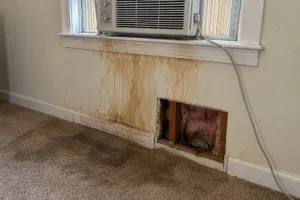
Hidden water damage can develop quietly behind walls, under flooring, and above ceilings long before visible damage appears. Many homeowners assume that if there is no standing water, there is no problem. In reality, hidden water damage often begins with small issues that go unnoticed until structural materials are affected.
Understanding the early indicators can help you address slow leaks and moisture intrusion before repairs become extensive. Here are five common signs of hidden water damage to watch for:
1. Water Stains or Texture Changes on Walls and Ceilings
One of the most common signs of hidden water damage is discoloration or changes in texture on ceilings or walls. Faint yellow or brown stains may indicate moisture collecting behind the drywall.
As drywall absorbs water over time, it begins to lose rigidity and weaken. Paint may bubble or peel without any obvious cause, and hairline cracks or slight sagging can also signal moisture saturation.
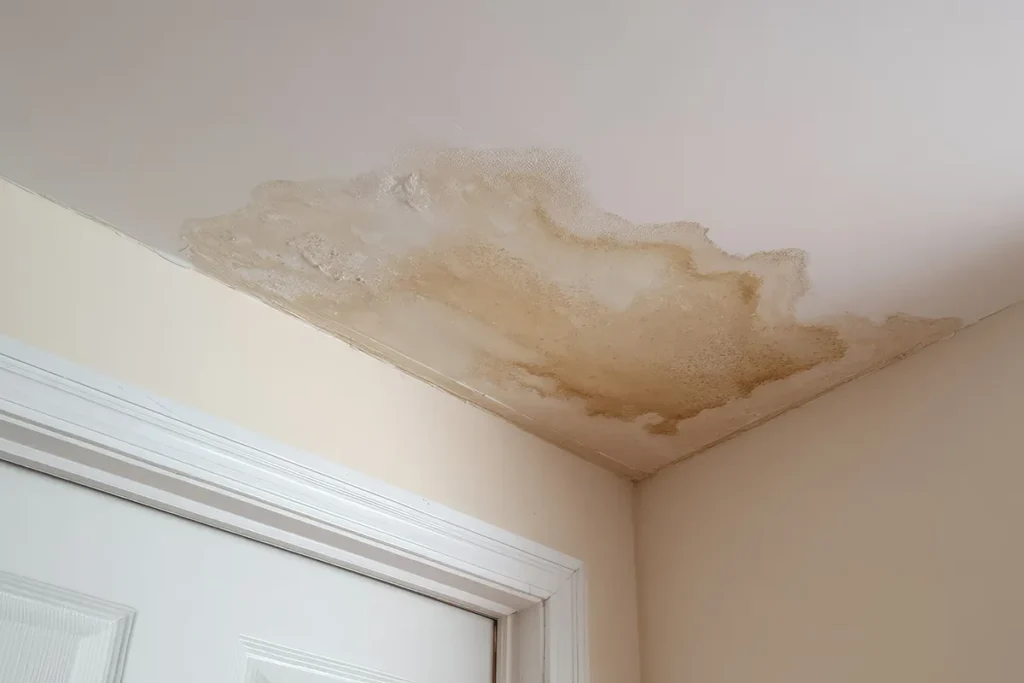
Ceilings beneath bathrooms, kitchens, or laundry rooms are especially vulnerable, since slow plumbing leaks above these areas can allow moisture to build up gradually before the problem becomes visible.
2. Warped, Buckling, or Soft Flooring
Moisture trapped beneath flooring can remain undetected for weeks. Hardwood floors may begin to cup or warp. Laminate flooring can swell at the seams. Carpets may feel damp even if the surface appears dry.
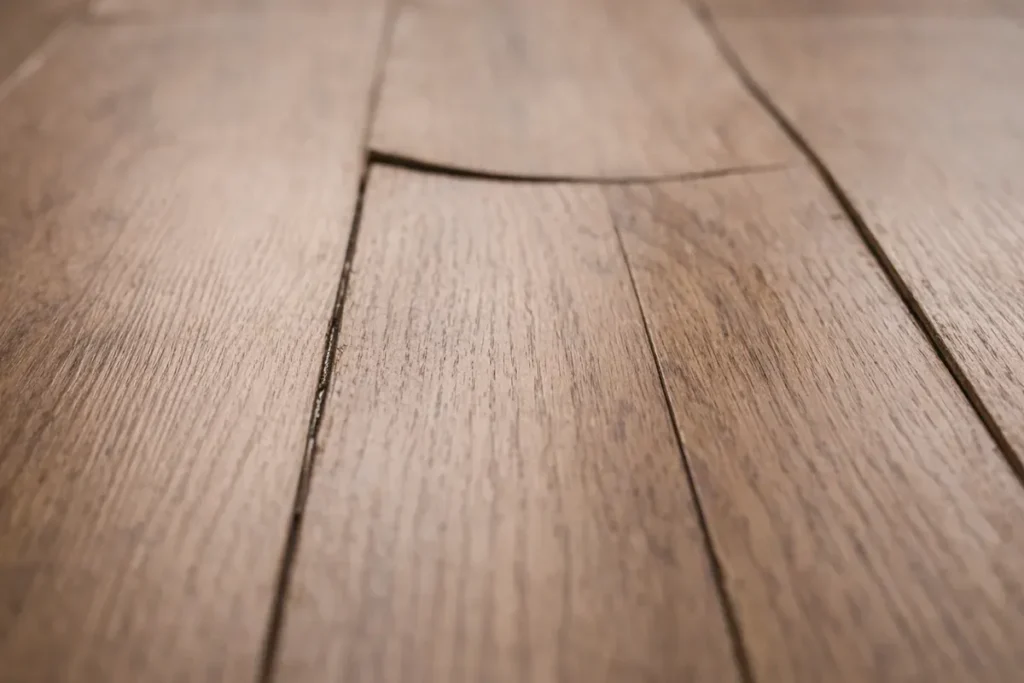
These changes often stem from slow leaks inside walls or beneath appliances. Water can travel along subflooring and settle in low points, gradually affecting structural materials.
If flooring begins to shift, soften, or separate, further inspection may be necessary to determine whether hidden water damage is present.
3. Musty Odors That Do Not Go Away
Persistent musty smells are another indicator. Even without visible staining, a lingering odor may suggest moisture in wall cavities or crawl spaces.

Slow leaks behind sinks, inside cabinets, or within plumbing lines can create damp environments that are not immediately visible. Over time, this trapped moisture can impact insulation, framing, and surrounding materials.
4. Crawl Spaces and Under-Home Moisture
Crawl spaces are particularly prone to hidden water damage. Plumbing lines run beneath many homes, and small leaks may drip for extended periods without detection. Poor drainage or elevated humidity can also allow moisture to accumulate below the structure.
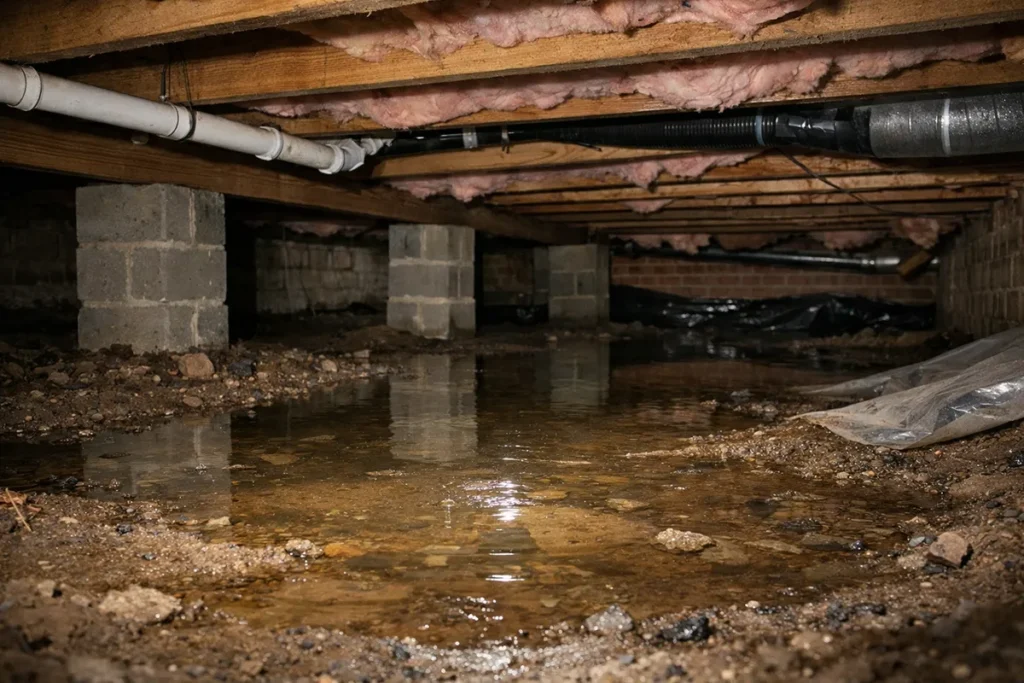
Signs of trouble in crawl spaces include:
- Standing water beneath the home
- Damp or sagging insulation
- Wood framing that appears darkened or soft
- Unusual odors rising into living areas
These conditions can compromise structural integrity if not addressed.
5. Water Stains Around Plumbing Fixtures
Bathrooms, kitchens, and laundry rooms contain multiple plumbing connections that can develop slow leaks over time. Small drips from supply lines, drain pipes, or fixture connections may not create immediate flooding, but they can gradually allow moisture to build up in surrounding materials.
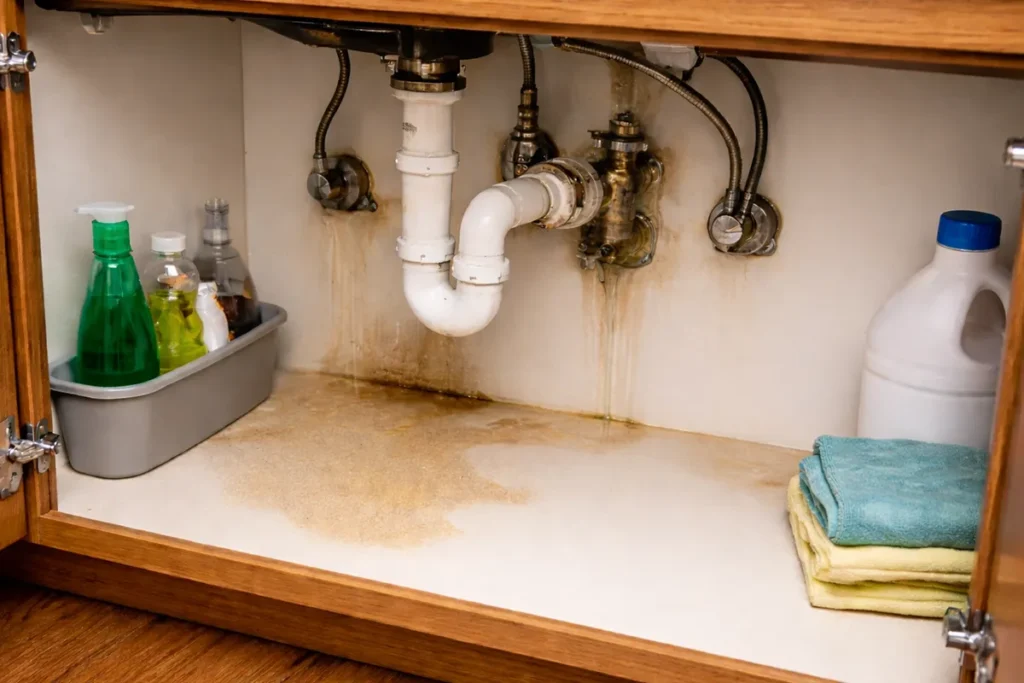
Watch for stains, discoloration, or dampness around plumbing fixtures such as under sinks, near toilet supply lines, around shower valves, or beneath bathroom and kitchen fixtures. Even minor staining or moisture around these areas can signal a hidden leak that should be investigated before it leads to more serious damage.
Structural Risks of Ignoring Hidden Water Damage
When hidden water damage remains uncorrected, it can weaken framing, subfloors, and support structures. Moisture intrusion may also increase the risk of mold growth, particularly in enclosed spaces where airflow is limited.
Addressing slow leaks early reduces the likelihood of costly structural repairs later. Professional moisture detection tools can identify damp areas behind finished surfaces without unnecessary demolition.
When to Seek Professional Inspection
If you notice recurring water damage signs but cannot identify the source, a professional evaluation may be warranted. Moisture meters and thermal imaging equipment can detect trapped moisture within walls and floors.
Water damage cleanup should begin as soon as hidden water damage is confirmed. Prompt mitigation helps prevent further spread beneath structural materials.
Protecting Your Home From Hidden Damage
Hidden water damage often begins with something minor: a loose plumbing connection, a slow drip, or elevated humidity in crawl spaces. Regular inspection of plumbing fixtures, ceilings beneath bathrooms, and flooring near appliances can help detect problems early.
If you find moisture where it shouldn’t be, or suspect hidden moisture, the professionals at CareMaster Fire & Water Restoration can identify the source and address the problem before structural damage worsens.